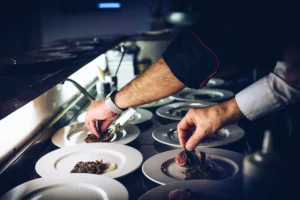
If you have ever compared your Google listing to a competitor nearby, you have probably noticed a pattern. Their reviews section is full of customer photos, dish close-ups, and short comments like “solid lunch set” or “went at 8pm, queue moved fast”. Yours might have a similar star rating, but fewer images and fewer details. Then you wonder why they show up more often on Maps.
This is where photo reviews vs text reviews restaurant becomes a useful question, because it is not just about vanity. Reviews influence both visibility and choice. The goal is to give Google enough confidence to surface you, and give diners enough confidence to pick you. Photo and text reviews support that in different ways.
Why Reviews Influence Google Maps and Local Search
Google Maps is a decision engine. Most diners are not doing deep research. They are scanning: rating, review volume, photos, distance, and whether the place “feels right”. Reviews help Google assess prominence and activity, and they help diners decide in seconds.
In many cases, restaurants that perform well on Maps tend to have:
- A steady flow of recent reviews
- Visual proof of what diners will actually get
- Review content that matches what people search for (dish names, neighbourhood cues, vibe)
Reviews do not work alone. They amplify the rest of your listing. If your category, hours, and menu info are clear, reviews help you climb. If your basics are messy, reviews struggle to compensate.
For a deeper breakdown of why customer feedback matters for visibility, it helps to understand how review signals directly influence both rankings and diner trust.
Do Photo Reviews Help Restaurant Google Rankings?
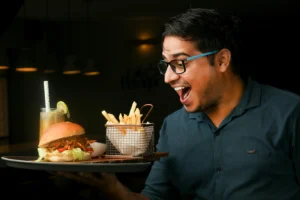
The short answer is that do photo reviews help restaurant Google rankings is usually less about “ranking power” and more about behaviour. Customer photos can increase engagement: more taps into your profile, more time spent browsing, more direction requests, more calls. Those actions often correlate with stronger local performance over time.
The other advantage is trust. Customer photos show portion size, plating, lighting, crowds, and even the real look of your space. For a cafe in Tiong Bahru or a supper spot in Geylang, those visuals reduce uncertainty. When diners stop hesitating, they act faster, and your listing can become a safer recommendation.
This is also the impact of customer photos on Google Maps visibility that owners feel most clearly. Your photos section becomes a living menu and a living atmosphere, even when your website is not being visited.
Are Text Reviews Better for Restaurant SEO?
Text reviews tend to help in a different way. Are text reviews better for restaurant SEO depends on what you are trying to rank for.
Text reviews often contain language that aligns with real searches:
- “best prata near Beauty World”
- “quiet cafe for work”
- “great omakase for birthdays”
- “family-friendly, stroller space”
That kind of wording reinforces relevance. It also helps diners who are filtering by needs, not just cravings. In practice, text reviews can support:
- Cuisine relevance (Italian, Japanese, Thai)
- Occasion relevance (date night, group dinner, quick lunch)
- Location relevance (near MRT, near a mall, near an office cluster)
If you only have photo reviews with no context, diners get visuals but not meaning. If you only have text reviews with no photos, diners get claims but less proof.
Photo Reviews vs Text Reviews Restaurant: What to Aim for in Practice

For most Singapore restaurants, the best outcome is not choosing one type. It is shaping a mix that mirrors how diners decide.
A practical target we often work toward:
- Encourage customer photos for signature dishes, set menus, and seating areas
- Encourage short text that mentions one specific detail: dish name, timing, location cue, or vibe
- Keep review velocity steady rather than spiky
What usually wastes effort is chasing “more reviews” without improving quality. Ten short reviews that say “good” do less than five reviews that mention dishes and show photos.
A simple way to guide customers without being pushy:
- A small QR on the table or receipt that leads to your review screen
- A friendly line at the right moment: “If you enjoyed it, a quick Google review helps other diners find us”
- A gentle suggestion: “Photos of your favourite dish are always appreciated”
Do not script people. The goal is authenticity. Google and diners can tell when reviews look manufactured.
A Simple Next Step for Singapore F&B Owners
If your listing feels “stuck”, reviews are often the easiest lever to improve, but only when the foundation is right. At SEO for Restaurants, we usually start by checking whether your Google Business Profile is set up to benefit from reviews: correct categories, clean location signals, strong photo coverage, and menu clarity.
These visibility issues are common, especially in dense areas where competitors are side by side. They are also solvable with a clear plan.
If you want a practical next step, consider a review and Maps visibility audit. It can show whether your issue is review quality, photo coverage, listing setup, or something else entirely, so you can fix the right thing first.