A diner used to search “best cafe near Orchard” and scroll through Google results. Now, some ask ChatGPT for “a quiet cafe near Orchard for a weekday catch-up, not too crowded, with good food”. This shift is why ChatGPT vs Google restaurant search matters for Singapore restaurant owners.
The question is not whether one replaces the other overnight. It is how diners move between both. Google still plays a major role in maps, reviews, opening hours, directions and bookings. ChatGPT-style search changes the start of the journey by narrowing options faster. Restaurants now need to be discoverable, understandable, and trustworthy across more than one search behaviour.
How ChatGPT Affects Restaurant Discovery
How ChatGPT affects restaurant discovery is mostly about filtering. Instead of showing a long list, it tries to give a useful shortlist based on a diner’s situation.
A customer might ask for:
- “family-friendly restaurants near Marina Bay”
- “good lunch spots near Raffles Place under $20”
- “quiet restaurants for a birthday dinner in Tanjong Pagar”
- “new cafes in Joo Chiat with good reviews”
To answer well, ChatGPT-style tools need clear public information. They may rely on website content, reviews, menus, location details, third-party mentions, and other available signals. A restaurant with vague descriptions, poor menu visibility, and inconsistent information becomes harder to recommend confidently.
AI-style discovery rewards restaurants that are easy to describe.
Google Maps vs AI Search For Restaurants
Google Maps vs AI search for restaurants is not an either-or issue. They serve different moments in the decision process.
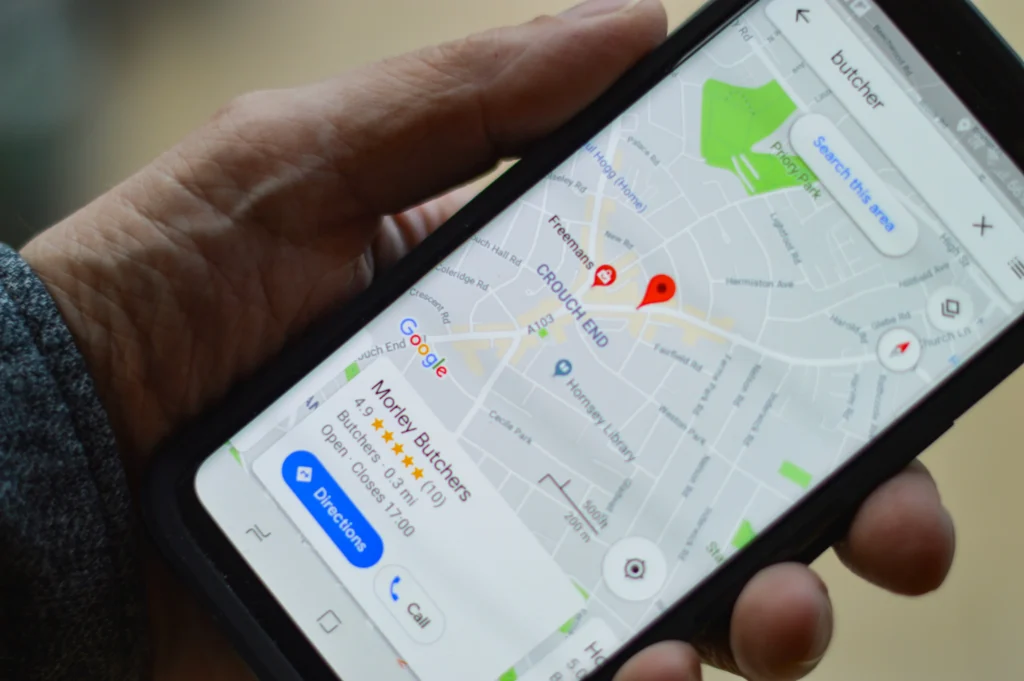
ChatGPT-style search is useful when diners are exploring options. It helps them think through preferences, occasions, and constraints. Google Maps is often where they verify the final choice. They check distance, photos, reviews, opening hours, directions, and whether the restaurant is currently operating.
This means a diner might ask ChatGPT for recommendations, then open Google Maps to confirm the listing. If your Google Business Profile looks weak, the recommendation may not convert. Old photos, unanswered bad reviews, missing menu links, or unclear hours can quickly break confidence.
For restaurants, this is the practical point: AI can introduce you, but Google Maps often closes the decision.
The Best Way Customers Search For Restaurants Online
The best way customers search for restaurants online is not one single path anymore. Most diners combine discovery and verification.
A common journey looks like this:
- They discover options through ChatGPT, Google, social media, listicles, or friends.
- They verify on Google Maps.
- They scan reviews, photos, menu, distance, and hours.
- They click to book, call, order, or request directions.
For Singapore F&B owners, this means SEO should not only chase rankings. It should support the full journey. Your restaurant needs clear website content, a strong Google Business Profile, recent reviews, readable menus, and consistent business information across platforms.
A weak link anywhere can stop the customer from choosing you.
What Restaurants Should Optimise Now
To compete in both Google and ChatGPT-style discovery, focus on clarity and consistency. If your goal is to appear in AI search more consistently, these fundamentals matter far more than chasing AI-specific tricks.
Start with your Google Business Profile. Make sure your category, address, pin, hours, photos, menu link, and booking link are accurate. Reply to reviews regularly and keep new photos coming.
Next, improve your website. Your menu should be readable in text, not only hidden inside images or PDFs. Your location page should mention your full address, nearest MRT, building name, and useful arrival details. Your pages should clearly explain what cuisine you serve and what occasions you fit.
Finally, build external proof. Relevant food articles, directory listings, delivery platforms, and customer reviews all help confirm what your restaurant is known for.
The goal is not to game every platform. The goal is to make your restaurant easier for both people and search systems to understand.
Where SEO For Restaurants Fits In
Many owners ask whether they should focus on Google or AI search first. In practice, the foundation overlaps. Accurate listings, strong reviews, clear menu pages, good website structure, and local mentions help both.
At SEO for Restaurants, we look at how your restaurant appears across Google Search, Google Maps, and AI-style discovery. A visibility issue may come from weak website content, messy business information, poor review signals, or a Google listing that does not convert.
Once you know the cause, the fixes become much clearer.
Closing Thought
ChatGPT is changing how diners explore restaurant options, but Google still remains central to verification and action. The restaurants that perform best will not be the ones chasing every new platform randomly. They will be the ones with clear, consistent, trustworthy information wherever diners check.
For owners unsure where the gap is, SEO for Restaurants can help diagnose whether your issue is discovery, verification, or conversion. A search visibility review can show how your restaurant appears across Google and AI-style search, and what to strengthen first.