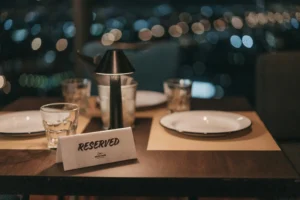
A quiet dining room creates pressure to do something quickly. Discounts go out. Paid campaigns get switched on. Social posts become more frequent. Sometimes those tactics help, but they also treat the slow period as a short-term traffic problem.
The more useful question is whether SEO can help restaurants during slow seasons by capturing demand that already exists but is reaching competitors instead.
It can, although SEO cannot manufacture diners who are not looking to eat out. Its value is in making the restaurant easier to discover for different occasions, locations, dishes, and needs when the usual sources of demand soften.
For owners asking whether restaurants really need SEO, slower periods are often when the difference between branded demand and broader search visibility becomes clearer.
First Work Out Whether Demand Actually Fell
A slow month does not automatically mean an SEO problem.
Singapore’s Department of Statistics tracks F&B activity through its monthly Food & Beverage Services Index, showing that restaurant and food-service sales can move between periods.
Individual restaurants can experience even sharper changes because of school holidays, office traffic, tourism, weather, festive periods, neighbourhood patterns, and their particular customer base.
This distinction matters.
If searches for your restaurant are stable but bookings decline, the problem may sit elsewhere. If branded and non-branded search visibility both fall, SEO deserves closer examination.
Do not diagnose a slow season from revenue alone. Compare demand, visibility, and conversion separately.
Search Behaviour Can Reveal Different Sources Of Demand
Google Trends can compare search interest across different periods and show whether changes are unusual or part of a recurring pattern. Google’s own guidance specifically recommends historical comparisons for identifying seasonal cycles. Google Trends also provides related searches, which can reveal how interests around a topic are changing.
For restaurants, this can encourage a more useful response than simply chasing “restaurant Singapore.”
A quieter weekday restaurant might have opportunities around:
- Business lunch
- Set lunch
- Group dining
- Private rooms
- Birthday dinners
- Early dinner
- Delivery or takeaway
- Restaurants near a particular MRT
- Specific signature dishes
This is where restaurant SEO during low demand periods becomes useful. The aim is to identify demand the restaurant can genuinely serve rather than forcing promotions onto everyone.
Seasonal SEO Should Begin Before The Slow Period
One mistake we see is reacting after empty tables become obvious.
If June is historically quiet, creating useful pages in late June gives them little time to be discovered and gain visibility.
A better approach is to identify recurring patterns early.
For example, a restaurant that performs strongly at dinner but struggles with weekday lunch could build a proper lunch page containing the menu, price range, operating hours, location, reservation details, and reasons the format suits nearby offices.
That page remains useful after the promotion ends.
Seasonal marketing strategies for restaurants work better when the underlying search asset survives the season.
A temporary Instagram promotion disappears down the feed. A useful lunch, private dining, catering, or festive-menu page can continue earning relevant searches.
Increasing Restaurant Bookings With SEO Requires Better Intent

More traffic is not necessarily the goal.
Suppose an expensive steakhouse attracts thousands of visitors to a generic article about cooking steak at home. Traffic rises, but reservations barely move.
Compare that with 150 visitors reaching a page about “private dining near Marina Bay” when the restaurant has an appropriate private room.
The smaller audience may be considerably more valuable.
At SEO for Restaurants, we look at whether search visibility connects with actual restaurant capacity and commercial priorities. During quieter periods, that may mean focusing less on headline traffic and more on searches tied to available tables, underused dayparts, events, or profitable services.
SEO Cannot Fix Every Slow Season
SEO is not a cure for weak demand, poor reviews, inconvenient pricing, an unsuitable concept, or operational problems.
But it can show whether the restaurant is missing people who are already searching for something it offers.
Slow periods are normal in F&B, and they do not always require aggressive discounting. Sometimes the better response is to understand where search demand still exists and make sure the restaurant is visible there.
If quieter months keep arriving without a clear explanation of what happens to your search visibility, a seasonal SEO review can help identify which opportunities deserve investment before the next slowdown begins.