A restaurant can rank higher on Google and still have empty tables.
That sounds contradictory until you look at what happens after the search. A diner finds the restaurant, reads the menu, decides it looks promising, then cannot see availability, cannot find a booking button, or gets sent to a reservation page that barely works on mobile.
So, does SEO help restaurants get reservations? Yes, but only when visibility connects with booking intent and a usable path to reserve.
This is an important distinction for owners considering why restaurants need SEO when customers are ready to book. SEO creates opportunities to be discovered. The restaurant still has to turn that discovery into action.
Not Every Google Search Is Equally Valuable
Someone searching “what is omakase” is probably further from making a reservation than someone searching:
- “omakase restaurant Tanjong Pagar”
- “anniversary dinner Singapore”
- “private dining room Orchard”
- “Italian restaurant near City Hall”
- “restaurant for birthday dinner Singapore”
The second group is showing stronger commercial intent.
That is where restaurant SEO for increasing bookings becomes more useful. Instead of chasing traffic broadly, the website needs pages that match the situations in which people are actually choosing where to eat.
A private dining page, for example, should not merely say that events are available. Capacity, menu formats, minimum spend where applicable, photographs, location and enquiry steps help somebody make a real decision.
The closer the search is to a dining decision, the more important the page behind it becomes.
Google Maps Can Shorten The Booking Journey
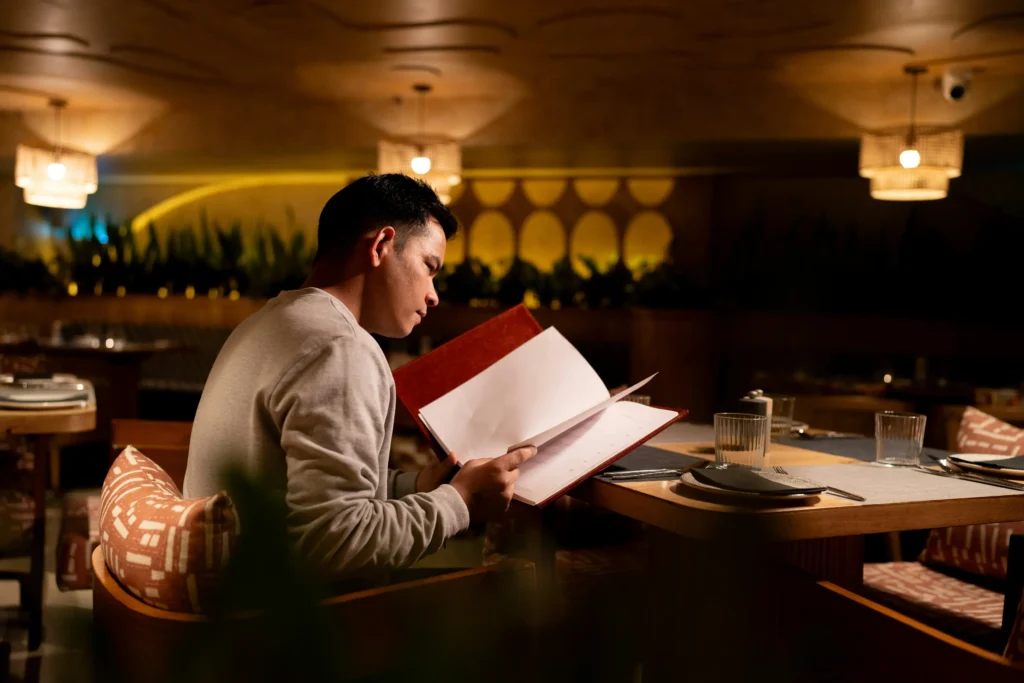
Restaurant discovery does not always begin on a website.
Someone searching Google Maps may compare photographs, reviews, menus and opening hours before deciding where to eat. Google Business Profiles can also include links that allow customers to make reservations directly. Google’s guidance on managing local business links confirms that businesses can add reservation links and select a preferred link when several are available.
For restaurants using compatible providers, Google also supports restaurant reservations through participating booking systems. Its booking-provider documentation explains that restaurants can connect supported providers or add their own booking link.
This matters because getting more restaurant customers from Google often means reducing the distance between discovery and reservation.
Every unnecessary click creates another opportunity to lose the diner.
SEO Help Restaurants Get Reservations Only If The Page Converts
Suppose a customer searches “romantic French restaurant Singapore” and reaches a restaurant page.
The SEO has done its first job.
Now the page needs to answer the questions stopping that person from booking.
Is there a tasting menu? What does dinner cost? Where is the restaurant? Are there suitable tables for two? Is a reservation required? What does the dining room actually look like?
We have seen restaurant pages receive relevant organic traffic while hiding the reservation button below several screens of brand storytelling.
That is not primarily a ranking problem.
A booking-ready visitor should never need detective skills to reserve a table.
Effective SEO strategies to attract diners online therefore involve both acquisition and conversion. Useful information brings the right person in; clear booking pathways help them act.
Measure Reservations, Not Just Rankings
A ranking report cannot tell an owner whether SEO is contributing to bookings.
Where technically possible, restaurant websites should measure useful actions such as reservation-button clicks, completed enquiry forms, calls or visits to booking confirmation pages.
Google Analytics allows businesses to designate important user actions as key events, then analyse which channels and user journeys contribute to those actions. Google’s key-event guidance explains how these actions can be measured across website activity.
At SEO for Restaurants, this is where restaurant SEO becomes more commercially meaningful. We want to know not only whether search traffic increased, but whether useful searches are reaching pages capable of producing enquiries or reservations.
Visibility Should Lead Somewhere
SEO cannot guarantee that every visitor becomes a customer. Table availability, pricing, reviews, menu appeal and the restaurant itself still influence the final decision.
But SEO can help more booking-ready diners discover the restaurant at the moment they are deciding where to eat.
If organic visibility is increasing but reservations are not following, the answer may not be “get more traffic.” Reviewing the searches, landing pages and booking journey can reveal where interested diners are dropping away and where the next improvement should happen.