As a restaurant owner in Singapore, you know that being visible on Google is essential for attracting new customers. But have you ever considered the subtle yet crucial differences between showing up on a standard Google search versus appearing directly on Google Maps? Many F&B owners treat them as the same thing, but they represent two distinct customer mindsets and require different optimization strategies, which is why understanding the broader journey of how diners discover restaurants online is key to capturing every potential guest. Understanding the google vs google maps restaurant search dynamic is key to capturing every potential diner.
The main distinction comes down to user intent. A person using Google Search might be in the planning phase, asking broad questions like “best Italian restaurants in Singapore.” A person opening the Google Maps app is often looking for an immediate solution, searching for “Italian food near me” with the intent to get directions and go now. Your visibility on both platforms is critical, but they serve different stages of the customer journey.
Google Search: Building Authority and Answering Questions

Google Search is where you build your brand’s story and authority. When users make broader queries, Google’s main search engine looks for websites, articles, and blog posts that provid comprehensive answers. This is where your website’s content plays a starring role.
To perform well here, your website needs to be more than just a menu. It should have rich content that tells Google what you are about. For example, a blog post about your new farm-to-table menu or a page detailing the history of your family’s recipes builds authority. This is how google search and google maps affect restaurant visibility in tandem; strong website content on Google Search signals to the entire Google ecosystem that you are a prominent player, which can indirectly boost your Maps ranking.
Google Maps: Winning the “Near Me” Moment
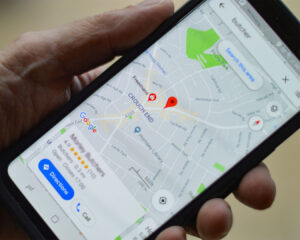
Google Maps is the modern-day directory, built for immediate, location-based action. When a customer is hungry and exploring an area, Maps is their primary tool. The goal here is not to rank for broad concepts, but to win the hyperlocal search.
The ranking factors for Maps are more direct and tied to your physical presence. Your Google Business Profile (GBP) is the centerpiece. Key elements like your exact address, operating hours, customer reviews, and uploaded photos are weighed heavily. A competitor with a more complete and active GBP will almost always appear more prominently on the map, even if their website is less impressive than yours. This highlights the core differences between google search and google maps for restaurants; Search values broad authority, while Maps values immediate, local relevance.
Optimizing for Google Search and Google Maps for Restaurants
You don’t have to choose one over the other. A holistic strategy involves optimizing for both platforms simultaneously, as they feed into each other.
- For Google Search: Focus on your website. Create separate, text-based pages for your menu, your location, and your story. Write blog posts about specials or events. Ensure your site is fast and mobile-friendly. This builds the broad topical authority needed to answer a user’s research-phase questions.
- For Google Maps: Obsess over your Google Business Profile. Fill out every single field. Upload high-quality, recent photos of your food and interior. Actively encourage happy customers to leave reviews. Use the Q&A feature to answer common questions before customers have to ask.
A complete GBP acts as a trusted summary for Google, making you a safe and reliable choice to recommend to users on the move.
The Synergy Between Search and Maps
The two platforms work together. A strong website with great content (which helps in Google Search) can be linked from your Google Business Profile. When a user finds you on Maps, they might click through to your website to see the full menu. If that website is slow or confusing, you can lose the customer you just won on Maps.
This is why a balanced approach to the google vs google maps restaurant search question is essential. A well-regarded website makes your business more “prominent” in Google’s eyes, which is a ranking factor for the Map Pack. A well-managed GBP provides the specific, structured data Google needs to place you in local results.
A Unified Strategy for Maximum Visibility

Understanding the different roles of Google Search and Maps allows you to stop leaving customers on the table. Visibility isn’t about being on one platform; it’s about creating a seamless digital presence across both. Though the optimization tasks differ, the end goal is the same: to be the best and most convenient answer for a hungry diner.
These foundational elements of digital marketing are often overlooked but are rarely difficult to resolve with a focused effort. An experienced partner can streamline this process, identifying the specific gaps in your strategy and implementing the fixes needed to get you seen.
If you’re ready to ensure your restaurant shows up for customers no matter how they search, schedule a free, no-obligation discovery call with us. Visit our website for more info: https://seoforrestaurants.com.sg/