It’s a scenario we encounter often: a restaurant owner pulls out their phone, types their own brand name into the search bar, and finds… nothing. Or perhaps they see their competitors dominating the map while their own venue is nowhere to be found. Discovering your restaurant not showing on Google is more than just frustrating; in a city as food-obsessed as Singapore, it directly impacts your bottom line. If potential diners can’t find you online, they assume you don’t exist, and that means lost foot traffic and missed revenue.
The good news is that this digital invisibility is rarely permanent. It usually stems from specific, fixable issues within your online setup. Understanding why this happens is the first step toward claiming your space on the map and ensuring hungry customers can find their way to your door.
Are you new to the SEO game? Interested to learn more about SEO for restaurant? Read more here.
Why Your Restaurant Isn’t Appearing on Google Search Results
There are several reasons why a venue might be invisible to search engines. Often, it comes down to how Google’s algorithm interprets the data available about your business.
Your Google Business Profile Isn’t Set Up Properly
The most common culprit is an incomplete or unverified Google Business Profile (formerly Google My Business). If you haven’t claimed your listing or completed the verification process, Google won’t display your physical location on Google Maps. Furthermore, if your profile lacks essential restaurant details like business hours, phone number, or a primary category, the system may deem your business profile unreliable. For instance, a pizza restaurant that fails to list “Pizza Delivery” or “Italian Restaurant” as categories might struggle to appear in relevant searches.
Your Business Information Is Inconsistent
Google relies on trust. It builds this trust by cross-referencing your business details specifically your Name, Address, and Phone (NAP) across the web. If your restaurant name is listed as “The Curry House” on your website but “Curry House SG” on Facebook, this inaccurate and inconsistent info confuses the algorithm. Local SEO depends heavily on accurate info and consistency. We advise owners to regularly check their listings on directories and social media to ensure their physical address and other business details match their Google profile exactly. Even small discrepancies in your physical address or business name can cause your ranking to drop in local search results.
Understanding Google Maps and Local Search Results
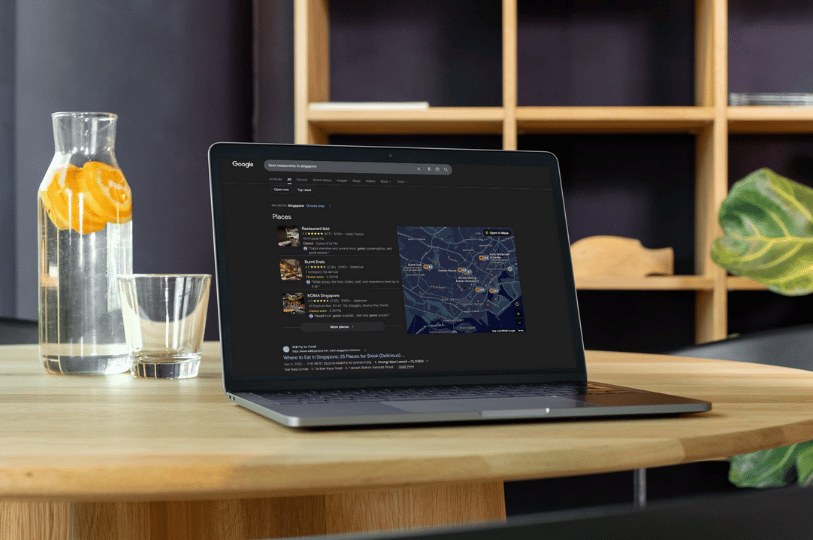
To fix visibility issues, it helps to understand how local search actually works. Google determines local search rankings based on three main factors: relevance, distance, and prominence. It wants to show users the most relevant result for their query.
When a user searches for an Italian restaurant on their mobile devices, Google looks for businesses that match that description (relevance), are nearby (distance), and are well-known and trusted (prominence). If your business information is sparse or your website is difficult to use on a phone, Google is less likely to recommend you. Mobile friendly sites are crucial because that is where the vast majority of dining decisions happen today.
Building a Strong Online Presence That Google Trusts
Fixing a restaurant not showing on Google requires building a foundation of trust and activity to improve restaurant visibility. A static profile is easily ignored; an active one is rewarded.
- Complete Profile: Fill out every field in your business info. Add high quality images of your menu items and interior. Visuals help potential customers make decisions and signal to Google that the business is active.
- Encourage More Reviews: Positive reviews are a huge ranking factor. Encourage happy customers to leave more reviews. Responding to all feedback including negative ones, shows you care about customer satisfaction and boosts your restaurant visibility.
- Post Updates Regularly: Utilize Google Posts to share updates about new dishes, delivery zones, or holiday hours. These post updates add depth to your profile and keep it fresh in Google’s eyes.
- Technical Basics: Ensure your restaurant website uses structured data (schema markup) to help search engines understand your menu and working hours clearly.
For example, an Indian restaurant that regularly posts photos of its lunch specials, responds to google reviews, and consistently post updates will naturally build prominence, signaling to Google that it is a relevant result for search terms like “best curry near me.”
Common Mistakes We See
In our work with local businesses, we see the same errors repeated. Many restaurant owners set up their profile once and never look at it again. They ignore Google Analytics data that reveals how new customers are finding them. Another frequent mistake is misconfiguring the service area. If you are a physical restaurant where people dine in, do not set your profile as a “service area business” unless you are purely delivery-only. This hides your location pin on map results, making you invisible to walk-in traffic.
You Don’t Have to Figure This Out Alone

Navigating the technicalities of search visibility can be overwhelming when you are trying to run a kitchen. However, solving these issues is essential for survival in today’s world. Your online visibility is the digital front door to your business.
If you are struggling to appear on Google, these are some of the most common reasons why your restaurant might not be showing up in local results. Understanding and addressing them can help you gain more visibility and attract more customers.
If you find the technical requirements confusing, you don’t have to tackle it alone. Partnering with with SEO for Restaurants who understands the unique needs of F&B can save you time and prevent costly mistakes. If you’re unsure where to start, a visibility review can show you exactly what’s holding your restaurant back.