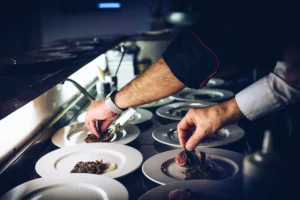
A diner in Singapore is planning dinner near Tanjong Pagar. A few years ago, they would search, open five tabs, and compare. Today, many people ask a single question and expect a clean shortlist: “Where should we eat near me that’s good for groups and not too loud?” That shift is why AI discovery restaurants Singapore is becoming a real visibility topic for restaurant owners, not just a tech headline.
In our experience, restaurants do not get “left out” because AI is biased against them. They get left out because their online signals are thin, inconsistent, or hard to interpret. AI-driven discovery rewards the restaurants that are easiest to understand and easiest to verify online.
How AI Changes Restaurant Discovery in Singapore
If you want to understand how AI changes restaurant discovery in Singapore, think about the decision process. Diners are compressing the journey. Instead of browsing widely, they ask a more detailed question upfront: location, cuisine, budget, timing, and vibe in one sentence.
That changes two things:
- The system has to “explain” why it recommends a restaurant
- The restaurant needs clear, public information that supports that recommendation
A hawker-style concept might still be popular offline but if its location details are unclear, its menu is hard to find, and its reviews are sparse, it becomes difficult to recommend with confidence. Meanwhile, a smaller cafe with clean listing details, strong photos, and consistent reviews can surface more often because it looks easy to validate.
In Singapore’s dense neighbourhood clusters, clarity often beats hype.
Where AI-Driven Restaurant Recommendations Singapore Pull From

Owners often assume AI recommendations come from some secret database. In practice, AI-driven restaurant recommendations Singapore usually pull from the same public sources diners already use, just synthesised into a faster answer.
The strongest sources tend to be:
- Google Business Profile details and activity
- Google Maps reviews, ratings, and customer photos
- Restaurant websites, especially readable menu and location pages
- Third-party sites like directories and food blogs
- Mentions across the web that confirm your restaurant is real and consistent
This matters because it changes what “marketing” means. A great Instagram feed helps awareness but it does not replace a clear public footprint. If your restaurant cannot be described accurately from public information, the system will often choose a safer option.
How Restaurants Show Up in AI Search Results Singapore
So how restaurants show up in AI search results Singapore comes down to being easy to interpret, with stronger results usually coming from restaurants that focus on improving restaurant discoverability through AI-driven search. Not trendy. Not loud. Just clearly documented.
Three visibility foundations we see working:
1) A Google Business Profile that looks visit-ready
Your profile should be complete and accurate: correct categories, service attributes, updated hours, working booking or ordering links, and fresh photos that reflect your actual experience. If your listing creates doubt, diners hesitate, and hesitation reduces engagement.
2) A menu and location page that Google can read
Many restaurants still rely on image-only menus or PDFs. That is fine for design, but weak for interpretability. A readable menu page with dish names and clear sections gives systems more confidence. Your location page should include consistent address formatting and nearby cues like MRT or mall name when relevant.
3) Steady trust signals from reviews and responses
Recency matters. A restaurant with 4.6 stars but no recent reviews can look dormant. A restaurant with steady reviews and calm owner replies looks managed. That impacts conversion and reinforces credibility.
AI discovery is often a trust filter first, and a taste filter second.
The Singapore-Specific Mistakes That Make You Harder to Recommend

In Singapore, a few small issues cause disproportionate visibility loss:
- Unit number inconsistencies across platforms (common in malls and shophouses)
- Soft launch hours not updated properly, causing “closed” impressions
- Duplicate listings from previous tenants, splitting trust signals
- Categories that are too generic, making you compete in the wrong space
- Photos that do not reflect reality, leading to bounce and distrust
These are not “AI problems”. They are online hygiene problems. But they become more costly when discovery relies on quicker recommendations.
What to Do If You Want Better AI Discovery Without Overcomplicating It
If you want to improve AI discovery, you do not need a new marketing channel. You need stronger signals in the channels that already shape discovery.
A practical checklist:
- Verify and complete your Google Business Profile, including categories and attributes
- Standardise your name, address, phone, and hours everywhere
- Build a readable menu page and a clear location page on your website
- Refresh photos to include food, seating, and storefront context
- Encourage reviews gradually and respond consistently, especially to concerns
This is also where SEO for Restaurants tends to help clients most. Not by chasing every new feature, but by tightening the assets that influence both Google Maps visibility and AI-driven discovery.
Closing Thought

If AI discovery feels intimidating, it doesn’t have to be. Most restaurants are not losing out because they missed a trend. They are losing out because their public information is incomplete or inconsistent. Once the fundamentals are cleaned up, visibility often becomes steadier across Google Search, Google Maps, and AI-driven recommendations.
Working with a restaurant-focused team like SEO for Restaurants can save time and prevent costly guesswork. If you want a practical next step, we can run an AI discovery readiness scan to check whether your listing, menu, reviews, and web signals are strong enough to be recommended confidently, and what to fix first.