If you’re running an F&B business in Singapore, you’ve probably noticed something confusing: you can have a strong menu, decent reviews, and a good location, yet still feel invisible online on slower days. The reason is often not “marketing”. It’s restaurant search behaviour Singapore owners underestimate.
Diners don’t browse the way restaurant owners expect, and you can understand this behaviour more clearly here. They search with urgency, they compare fast, and they rely heavily on Google Maps to reduce risk before they commit.
When you understand how diners search, you stop guessing what to optimise. You start building visibility around real decision patterns, not assumptions.
Why Restaurant Search Behaviour Singapore Looks Different From Other Markets
Singapore is compact, dense, and convenience-led. Diners rarely search by city. They search by MRT stops, malls, neighbourhood clusters, and “near me” moments. A lunch crowd in Raffles Place behaves differently from weekend diners around Joo Chiat. A family in Tampines filters for different cues than a couple browsing Tanjong Pagar.
That density creates competition, and competition changes behaviour. Diners compare quickly. They are not reading long pages. They are scanning for proof: photos, ratings, recency, and whether the place seems easy to visit right now.
Your online presence has to answer “Should I go?” in seconds.
How Singapore Diners Search For Restaurants Online
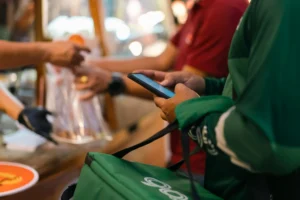
If you want a practical framework for how Singapore diners search for restaurants online, it usually falls into three modes:
1) The immediate search (decision in minutes)
This is “near me”, “open now”, “late night supper”, “coffee nearby”. Diners often go straight to Google Maps, not websites. They check distance, hours, photos, and a handful of recent reviews.
2) The planned search (decision in hours or days)
This is “birthday dinner”, “best omakase”, “date night restaurant”, “private dining”. Diners may open Google Search first, then confirm on Maps. They look harder at menus, pricing cues, and whether the experience matches the occasion.
3) The group search (decision by committee)
One person searches, then shares options in chat. In this mode, visuals matter more. Customer photos, seating, ambience, and review snippets often become the deciding factor because they are easy to forward.
If your listing or website doesn’t support these three patterns, you can be great and still get skipped.
Google Maps Restaurant Search Trends Singapore Owners Should Notice
When owners talk about rankings, they often think about websites first. In reality, Google Maps restaurant search trends Singapore is where many conversions happen, especially for non-branded discovery.
In Maps, diners typically check:
- Category relevance (is this really a cafe, izakaya, steakhouse, or just “Restaurant”)
- Review volume and recency (does it look active this month)
- Photo proof (food, seating, storefront, lighting)
- Hours and convenience (open now, last order, closures)
- Ease of action (call, directions, booking link, order link)
If your profile is missing one of these, diners bounce and choose the next option. Over time, that behaviour can contribute to weaker visibility because your listing is not being selected as often.
What Influences Restaurant Choices in Singapore Searches

Owners often ask why competitors rank higher. The answer is usually found in what influences restaurant choices in Singapore searches, which is a mix of trust and friction.
Trust signals:
- A steady stream of real reviews
- Calm owner replies, especially to complaints
- Consistent business details across the web
- Photos that match reality, not only styled hero shots
Friction reducers:
- Accurate hours and special hours
- Clear menu access (not hidden behind PDFs only)
- Booking or ordering links that work on mobile
- Correct map pin placement, especially in malls and shophouses
Diners are not only choosing food. They are choosing certainty. The restaurant that feels easiest to confirm often wins.
Turning Behaviour Into Visibility Without Overbuilding
You don’t need a complicated strategy. You need alignment.
A simple approach we often recommend:
- Treat your Google Business Profile as your main storefront, not a set-and-forget listing
- Make your menu readable online with text structure, not only images
- Use neighbourhood cues naturally (MRT, mall name, nearby landmarks) where relevant
- Build review momentum steadily, not in one-day bursts
- Refresh photos regularly so your listing looks current
AI-driven discovery also sits on top of these same signals. When diners ask conversational questions like “where to eat near me that’s good for groups”, systems tend to rely on the clearest public information available. Strong basics support both traditional search and newer recommendation layers.
Closing Thought
If your restaurant isn’t showing up consistently, it rarely means you’re doing everything wrong. In many cases, your online signals simply don’t match how diners in Singapore decide. Once the signals align, visibility often becomes steadier and easier to predict.
Working with a specialist team like SEO for Restaurants can help you avoid trial-and-error and focus on the changes that actually influence discovery. If you’d like a practical starting point, we can map your current visibility against real diner search patterns in your neighbourhood, then highlight the few fixes most likely to increase calls, directions, and bookings.
Visit our website for more info.