Opening a new restaurant in Singapore is an exhilarating whirlwind of menu testing, interior design, and staffing logistics. But after the red ribbon is cut and the friends-and-family soft launch is over, many owners face a stark reality: silence. The anticipated rush of new customers doesn’t materialize, and the reservations book remains unsettlingly empty. This leads to the painful question of why new restaurants don’t get discovered, despite having great food and a prime location.
In our work with F&B brands across the island, we often see this happen not because the concept is flawed, but because the digital infrastructure required for discovery hasn’t been built. If you want a practical walkthrough of what to set up early, start with our guide on new restaurant seo singapore checklist for getting discovered from day one. In the modern dining landscape, discovery is rarely accidental. It is a digital process, and understanding the mechanics behind it is crucial for survival.
The “Sandbox” Effect

One of the primary reasons new restaurants struggle to gain visibility is what SEO professionals often call the “sandbox effect.” When a new website or Google Business Profile goes live, search engines like Google treat it with caution. They don’t yet know if your business is legitimate, reliable, or relevant.
Google’s priority is to protect its users from bad experiences. It is hesitant to recommend a brand-new entity over a competitor that has been operating (and receiving reviews) for five years. This “probation period” means you might not show up for broad searches like “best cafe in Tiong Bahru” immediately. Instead, you are invisible until you prove your worth through consistent data signals: accurate listings, steady traffic, and growing authority.
Lack of Digital Footprints
A common misconception is that simply existing online is enough. However, discovery relies on a web of interconnected information. If your restaurant has a website but isn’t listed on major food directories, doesn’t have a verified Google Map location, or lacks mentions on social platforms, search engines view it as an island.
Search algorithms look for corroborating evidence to verify your existence. They scan the web for mentions of your Name, Address, and Phone number (NAP). If these citations are missing or inconsistent, the algorithm loses confidence in your data. How to improve discovery for new restaurants often starts with creating these digital footprints aggressively. You need to ensure that when a search engine crawls the web, it finds multiple reliable sources confirming that you are open for business at a specific location.
Why New Restaurants Don’t Get Discovered on Maps
For local businesses, Google Maps is the most critical discovery channel. Yet, many new venues fail to optimize this specific asset. We frequently see profiles that are verified but incomplete. They might lack a specific category (listing just “Restaurant” instead of “Peranakan Restaurant”), have no menu link, or feature zero photos of the food.
When a user searches for “dinner near me,” Google’s AI assesses relevance. If your profile is barren, the AI cannot determine if you are a good match for the user’s intent. It will bypass you in favor of a competitor with a detailed profile, even if that competitor is further away. This lack of optimization is a silent killer for foot traffic.
The Trust Gap: Reviews and Authority
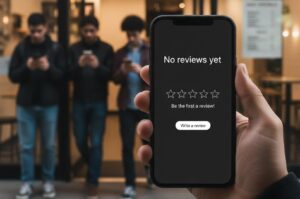
Finally, new restaurants suffer from a lack of social proof. In a city as food-obsessed as Singapore, diners are risk-averse. They rely heavily on reviews to validate their choices. A profile with zero reviews is a red flag for potential customers and search algorithms alike.
Boosting online presence for new restaurant openings requires a proactive strategy to gather initial feedback. Without a steady stream of genuine reviews, your business lacks the authority signals needed to rank. Search engines want to recommend popular, well-liked places. Until you build that initial layer of trust, you will struggle to break through the noise of established competitors.
Accelerating the Discovery Process
The silence of a new dining room is stressful, but it is not a permanent condition. The factors preventing discovery are logical hurdles, not insurmountable walls. By understanding how search engines evaluate new businesses (prioritizing trust, consistency, and relevance) you can shorten the time it takes to become visible.
Building this visibility is a systematic process. It involves more than just waiting for customers to stumble upon you; it requires actively signaling your relevance to the digital world. If you find the technical aspects of this process overwhelming while trying to run a kitchen, know that you don’t have to navigate it alone. If you’re unsure where to start, a visibility review can help clarify the situation.